


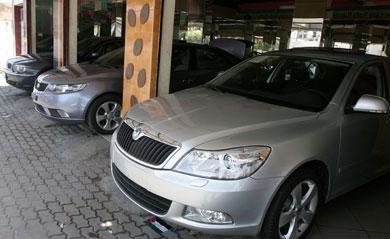
Palestinian security officials in Ministry of Interior have called all personages and leaders of resistance factions to deal with caution when buying cars, that the Israeli occupation allowed to enter the Gaza Strip in the recent times and subjected to a special screening by them.
Those officials said: "It was circular to all concerned authorities to deal cautiously through buying cars that arrive to the Gaza Strip by the Israeli entity," and they alerted this matter not to make the citizens maniac.
Therefore, spokesman for Ministry of Interior Eng. Ihab Al-Ghusain confirmed the validity of this circular, saying: "Already we have sent signals for being for cautious in dealing with these cars, whereas, it is unlikely that the Israeli occupation plants listening devices inside them."
In response to a question about the nature of these devices that have been presented at the conference which held to announce the results of the campaign against collaborating with enemy, Al-Ghusain said: "The devices that have been displayed are simple samples of what were seized or handed over by the repentant spies. "
He also explained the mechanism of these devices: "some of them were used to listen and follow what is said by its reliance on non-wired sound vibrations, and others were used to photograph and identify the places."
Al-Ghusain confirmed that the Israeli occupation used these devices to search for their captive soldier Gilad Shalit in Gaza, and to identify the leaders of resistance, arms depots, and places of fighters to enhance the bank of objectives and to ensure the authenticity of the information which received from spies.
Moreover, Al-Ghusain accused the Israeli occupation of being behind the smuggling of drugs into Gaza through the tunnels, either along the southern boundary of the besieged Gaza with the Egyptian territories or across their borders that extended from Rafah to Beit Hanoun.


